Apr 8, 2026
Better Building Blocks for Vault Integrators
From discovery platforms to vault aggregators, integrators are looking for better yield inventory, clearer risk signals, and more differentiated products. Lotus is built to provide all three.
DeFi has no shortage of vaults. What it lacks is a broad set of differentiated, underwritable credit opportunities to put inside them.
On one end of the market, conservative vaults often converge around the same few trades with muted returns. On the other, high yield products often depend on harder-to-underwrite collateral with hidden tail risks, as we have seen with Usual.money, Stream.finance and, most recently, Resolv. That leaves a missing middle for platforms trying to build a full vault menu.
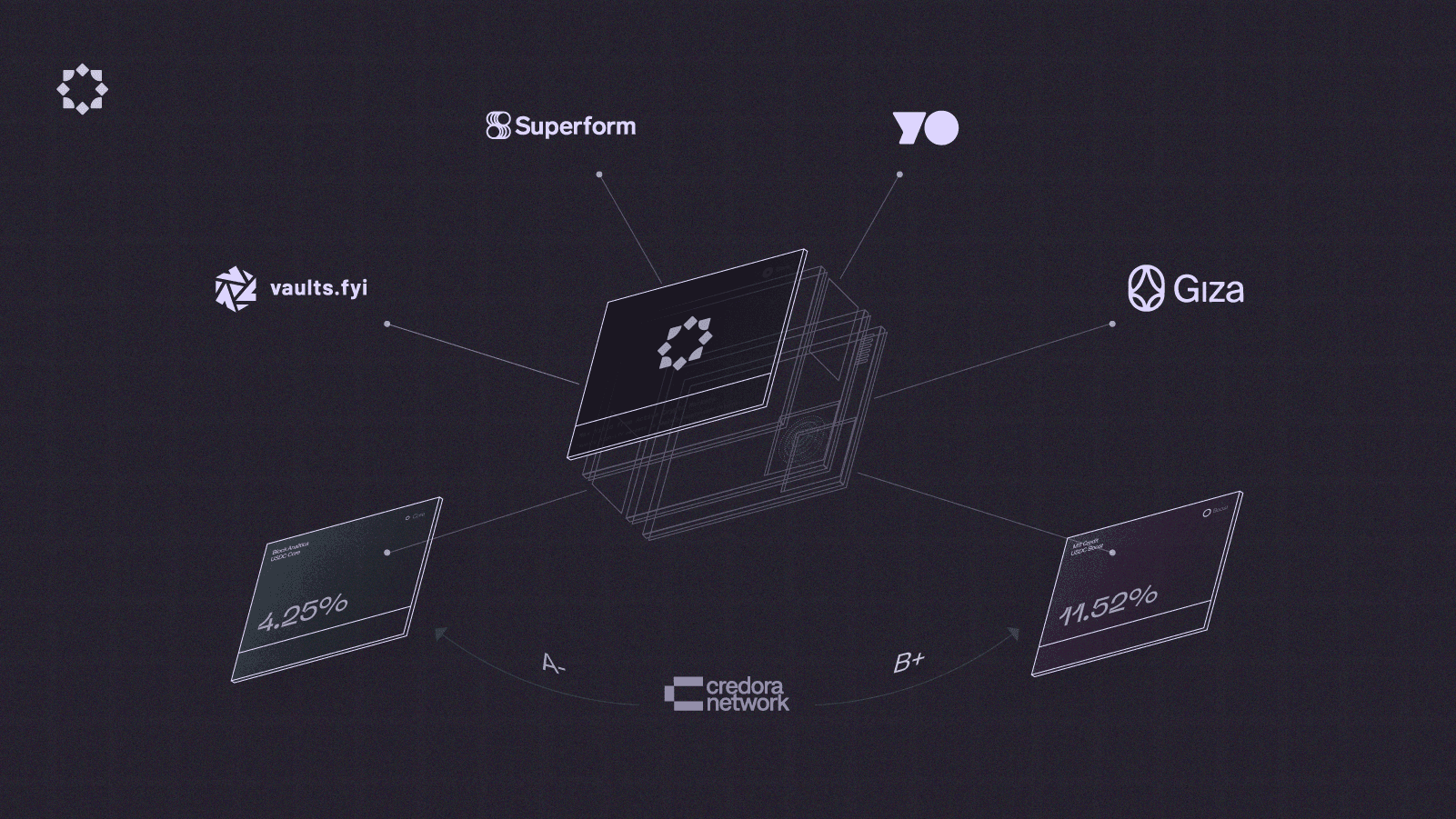
Lotus is designed to produce a curve of risk-priced opportunities on collateral you can actually understand and trust. Within a single ETH/USD market, capital can be deployed across multiple tranches, with each tranche representing a distinct risk profile and rates that reflect it. Because each tranche has explicit bounds and a Credora risk rating, integrators can do more than simply chase APY. They can package yield, define mandates, and compare products based on exposures that better match a specific strategy, user need, or risk profile.
Vaults may be the packaging layer for onchain yield, but packaging is not the same as product. The quality of a vault still depends on the credit engine underneath it: how risk is segmented, how legible the exposures are, and whether the resulting opportunities are distinct enough to deserve shelf space.
Lotus is designed to improve that underlying raw material. Better ingredients, better vaults.
Why different integrators care
Discovery platforms: more vaults do not automatically mean better choices
“We have customers on both sides of the vault market, and the pattern is consistent: platforms cluster toward safe, well-understood products or high yield plays. There's a dead zone in the middle where risk is real but not legible enough to integrate confidently. Better risk tiers from the protocol layer can open that up.” Ryan Rodenbaugh, CEO at Vaults.fyi
For platforms that help users discover, compare, and ultimately earn yield on their digital assets, the challenge is no longer just listing more vaults. As the category grows, the harder problem is helping users distinguish between products that may offer similar yields but very different underlying risk.
That is part of what makes Lotus interesting to platforms like Vaults.fyi. By making risk more explicit at the market level, Lotus gives discovery platforms a clearer way to sort, compare, and surface products for users with different risk preferences. Exactly how that should appear in product surfaces is still being worked out across the ecosystem.
Vault aggregators: limited by someone else’s menu
Even sophisticated vault aggregation platforms are still constrained by the menu of vaults and LTV choices someone else has already curated. Lotus changes that by making parameters like LLTV configurable at the market level. For vault managers, that flexibility is powerful. It means more precise control over how a product expresses leverage, looping, and exposure.
Superform
Superform is a user-owned neobank that offers optimized yield on USDC, ETH, and BTC via its SuperVaults. For them, the attraction is not just another venue. It is the ability to get more granular about strategy construction instead of being boxed into a narrow set of pre-packaged options.
“What has always stood out to me about Lotus is the flexibility it gives curators. Instead of being limited to a fixed menu of vaults and LTV options, you can get much more granular about the strategy you want to express.” Christian Dumas, Head of Ecosystem at Superform
Some platforms do not want to rely only on pre-built vaults. They want the ability to allocate directly to the markets and tranches that best match their own view of risk. That is especially relevant when existing venues either dilute yield, constrain the available market set, or misprice risk simply because liquidity has already concentrated there.
YO
YO, short for “Yield Optimizer,” builds vaults that optimize to deliver users the best risk-adjusted yield across DeFi through continuous rebalancing. YO offers optimized yield through six vaults: yoUSD, yoETH, yoEUR, yoBTC, yoGOLD, and yoSOL. For YO, the goal is not just access to more yield venues. It is the ability to differentiate from traditional vault aggregators by allocating closer to the source of yield. Lotus extends that design space by opening up direct allocation to markets and tranches, not just someone else’s pre-packaged vault strategy, giving YO more control, flexibility, and the ability to capture yield that others can’t.
“YO allocates to specific markets as well as vaults to provide diversification and maximize risk-adjusted yield. Some vaults are expensive for the underlying exposure, have limited markets, or spread yield too thin. By being more granular, we can optimize yield across DeFi directly from the source.” Oscar Rivera, Head of Product at YO
Agentic finance needs explicit risk
There is a more forward-looking version of this story as well. As capital allocation becomes more agentic, the same market structure that helps human curators may be even more useful for autonomous systems. Risk tiers that are explicit, configurable, and machine-readable give agents more structured inputs than a one-size-fits-all lending venue can provide.
Giza, which describes itself as building autonomous agents for onchain capital, points to why that matters. If agentic yield optimizers become an important distribution channel, protocols like Lotus could be useful precisely because they turn risk into something easier for AI agents to evaluate and allocate across.
“What makes Lotus interesting for Giza agents is its tranched architecture, which makes risk tiers more explicit. That gives agents a more structured and granular way to weigh risk-adjusted yield and target the exposure best suited to their strategy.” Raphael Doukhan, Lead Engineer at Giza
Conclusion
The strongest signal is not simply that partners are interested. It is that different types of platforms see different kinds of value in the same underlying architecture.
Taken together, these use cases suggest Lotus is not just another destination for capital. It is infrastructure that other platforms can build on top of. If Lotus can become a better source of risk-priced inventory for the systems already curating, packaging, and allocating yield, distribution can grow through those integrators.
Vaults are the packaging layer. Better vaults require better building blocks beneath them.